Crypto Custody Could Get Easier to Access and Harder to Evaluate
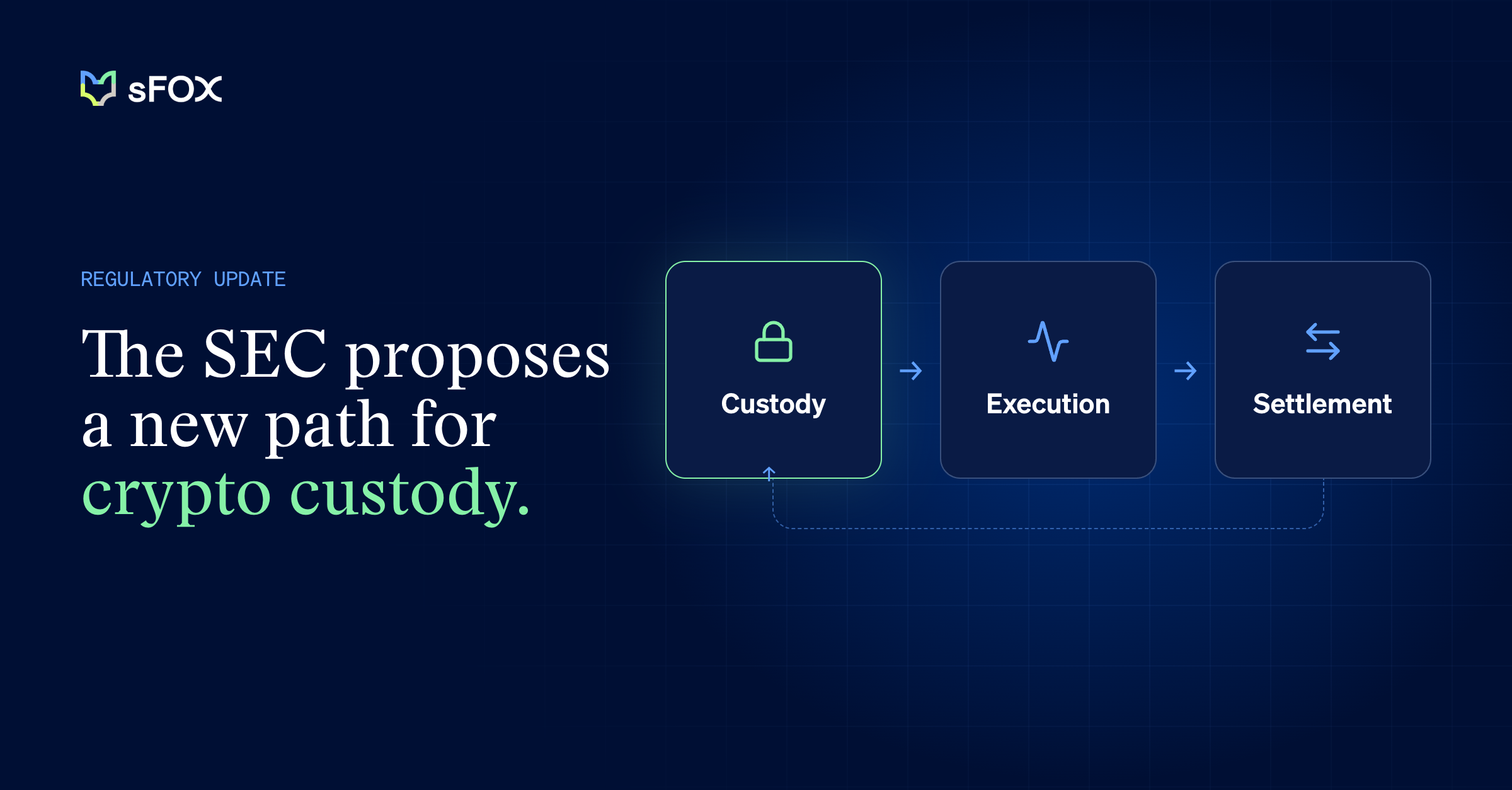
The SEC’s latest crypto custody proposal could give registered investment advisers and regulated funds more ways to custody certain digital assets. The headline changes are straightforward: qualifying state trust companies could serve as permitted custodians, while advisers and funds could hold certain crypto assets themselves when an appropriate third-party custodian is unavailable, subject to additional conditions.
But expanding the number of available custody paths does not necessarily make the institutional custody decision simpler.
If adopted, the proposal could shift part of the conversation from whether a compliant custody route exists to a more operational question: which custody structure is appropriate for the asset, the strategy and what the institution ultimately needs to do with it?
Regulatory Eligibility Is Only the First Question
Under the proposal, registered investment advisers and regulated funds could use qualifying state trust companies to custody applicable crypto assets. But permitted status alone would not end the analysis.
Before engaging a state trust company, and annually thereafter, an adviser or regulated fund would need to conduct due diligence and have a reasonable basis for determining, among other requirements, that the company is authorized by the relevant state banking authority to provide crypto custody and maintain appropriate safeguarding policies.
The SEC describes the purpose of this due diligence as determining whether the trust company is an “appropriate and capable” custodian.
For an investment team evaluating its options, that creates an important distinction: two custody arrangements can potentially satisfy the applicable regulatory framework while operating very differently.
Beyond determining whether a custody arrangement is permitted, institutions may want to understand:
- Asset protection: How are client assets held and segregated?
- Control: Who can authorize transactions, and how are private keys protected?
- Counterparty exposure: Which entities interact with the assets throughout their lifecycle?
- Asset coverage: Which assets and networks can the custodian operationally support?
- Resilience: What controls, recovery procedures and protections apply if something goes wrong?
The proposed rules would establish specific requirements in some of these areas. Others remain part of the broader operational and counterparty diligence institutions may perform when selecting a provider.
More permitted custody options therefore do not necessarily make custody providers interchangeable.
An Asset Can Be Tradable Without Being Institutionally Investable
One of the more revealing parts of the proposal is the provision being described as “self-custody.”
The term is somewhat misleading. The proposal is not referring to an end investor simply holding their own private keys. It would allow an adviser or regulated fund, under specified conditions, to maintain crypto assets itself when no permitted custodian is available.
For advisers, that determination would need to be made before taking custody and reassessed at least quarterly. Additional safeguards would apply, including requirements related to cybersecurity, internal controls, reporting and disclosures.
Why create the exception at all?
The SEC acknowledges a practical problem: traditional permitted custodians may not be available, willing or technologically capable of safeguarding every crypto asset an adviser or fund may want to hold.
That exposes a more fundamental constraint in institutional digital asset markets: liquidity does not guarantee institutional access.
An asset can have deep liquidity, significant market demand and a compelling investment thesis. But if an institution cannot custody it within its required framework, those market conditions may be insufficient to make the strategy operationally viable.
This creates a gap between what is tradable in the market and what is accessible to institutional capital.
It also challenges the assumption that custody is a downstream consideration, addressed only after an investment decision has been made. For some strategies, custody infrastructure can be a prerequisite for participation in the first place.
An asset’s institutional opportunity is therefore shaped not only by its market characteristics, but also by the infrastructure available to hold, trade and settle it.
The SEC’s proposed conditional self-custody pathway acknowledges part of this infrastructure constraint. It may expand the available routes for holding certain assets, but it does not remove the operational responsibilities or risks associated with doing so.
Custody Due Diligence Does Not Necessarily End at Custody
Protecting an asset at rest is only one part of an institutional digital asset workflow.
At some point, an institution may need to trade, rebalance, transfer or exit a position. That raises a second set of questions:
- Where does the asset need to move to execute?
- Does capital need to be prefunded at a trading venue?
- Which counterparties are introduced during execution and settlement?
- When does the asset leave the custody environment?
- How does it return after a trade settles?
The custody structure an institution selects can influence how it accesses liquidity, deploys capital and manages counterparty exposure.
Consider the difference between a model that requires assets to be transferred to individual trading venues before execution and one that supports trading from a segregated custody environment.
The first may introduce additional venue exposure and prefunding requirements. The second may allow an institution to access liquidity while reducing the need to move assets between venues before each trade, depending on the execution and settlement arrangements.
Both approaches may be viable, but they can create materially different capital requirements, settlement dependencies and risk profiles.
This is where custody decisions become inseparable from execution strategy. An institution evaluating a custodian solely on its ability to safeguard assets may overlook how that arrangement affects the movement and deployment of capital.
The more useful question is not simply where an asset can be held, but what the institution can do with it while maintaining its required protections.
For institutional digital asset strategies, custody, execution and settlement should therefore be evaluated as interconnected parts of the same infrastructure decision.
More Options Don’t Eliminate the Architecture Decision
The SEC’s proposal remains just that: a proposal. It could change through the rulemaking process, and the proposed crypto custody provisions do not apply universally to every crypto asset or every institutional investor.
But it highlights a broader issue that exists regardless of the final rule.
Expanding the universe of available custodians may address an access constraint. It does not make different custody structures equivalent.
For advisers and regulated funds evaluating digital asset infrastructure, the relevant questions extend beyond whether a provider can custody an asset. They include how the asset is protected, whether the custodian supports the assets and networks the strategy requires, what happens when those assets need to trade, and which counterparties are introduced along the way.
More custody options may solve an availability problem. Choosing between them remains an architecture decision.
What is the SEC’s 2026 crypto custody proposal?
On October 1, 2026, the SEC proposed new rules and amendments addressing custody by registered investment advisers and regulated funds. Among other changes, the proposal would permit qualifying state trust companies to custody applicable crypto assets and create a conditional path for advisers and funds to maintain certain crypto assets themselves.
The proposal is not yet a final rule.
Can investment advisers self-custody crypto under the SEC proposal?
Under specified circumstances. An adviser would first need to determine, after due inquiry, that no permitted custodian is available to maintain the crypto asset. That determination would need to be documented before taking custody and reassessed at least quarterly, and additional safeguarding requirements would apply.
The SEC’s use of “self-custody” refers to an adviser acting as custodian for client assets, rather than an individual investor holding assets without an intermediary.
Can state trust companies custody crypto for investment advisers and funds?
The proposal would allow eligible state trust companies to serve as permitted custodians for applicable crypto assets, subject to conditions. Advisers and regulated funds would be required to perform due diligence before engaging a state trust company and annually thereafter, including determining whether it is appropriately authorized and maintains required safeguarding policies.
Does the SEC proposal apply to all crypto assets?
No. The scope differs under the relevant federal securities laws. As proposed, the Advisers Act custody amendments would apply to crypto assets that are funds or securities and, for regulated fund accounts, securities or similar investments. The proposed Investment Company Act custody rules would apply to crypto assets that are securities or similar investments.